Virginia Home Grown
Bulbs and Beyond
Clip: Season 26 Episode 8 | 6m 52sVideo has Closed Captions
Learn the differences in bulbs, tubers and corms!
Peggy Singlemann and Chris Martin discuss the diverse world of self-contained, underground storage units that plants use to house their entire life-cycles, to examine the differences in bulbs, tubers, corms, rhizomes and more. Featured on VHG episode 2608, October 2026.
Problems playing video? | Closed Captioning Feedback
Problems playing video? | Closed Captioning Feedback
Virginia Home Grown is a local public television program presented by VPM
Virginia Home Grown
Bulbs and Beyond
Clip: Season 26 Episode 8 | 6m 52sVideo has Closed Captions
Peggy Singlemann and Chris Martin discuss the diverse world of self-contained, underground storage units that plants use to house their entire life-cycles, to examine the differences in bulbs, tubers, corms, rhizomes and more. Featured on VHG episode 2608, October 2026.
Problems playing video? | Closed Captioning Feedback
Where to Watch Virginia Home Grown
Virginia Home Grown is available to stream on pbs.org and the PBS app.
Providing Support for PBS.org
Learn Moreabout PBS online sponsorshipAnd now, Chris, I've brought some bulbs as well as a lot of other, I'll say, storage devices of plants, 'cause we have a habit of saying bulbs and it encompassing a whole lot when actually there are certain plants have certain storage devices.
So let's start with the potato because that's really the most common.
>>Totally.
>>Everybody can relate to a potato.
And usually what we don't want it to do is what mine are doing right now, which the eyes on it are sprouting.
And then there's various eyes throughout the potato, which makes it a stem.
>>Mm-hmm.
>>All right?
And so once these eyes start to sprout and grow, then the roots will start to grow off of that, which is why you can cut this into a little cube, put it in the ground, and the eyes will sprout into a shoot and then the roots will come on.
So this is technically, as with a lot of what's on this table, a modified stem that is storing energy for the plant.
>>And remind me, when you cut off each of the eyes, can you put it directly in the ground or does it need to dry out a little bit?
>>I dry it out for a day- >>Okay.
>>Or two so it calluses.
>>Okay.
>>And I make sure I also have at least an inch.
But yeah, isn't that kind of cool?
>>That is exciting.
>>It's a storage device, okay?
Now, we all love caladiums, at least Peggy loves caladiums.
(laughing) I love all the various colors of the leaves, but way down in there, which enables it to grow with so many, I'll say shoots coming out is because it's a tuber, like a potato.
>>Which is a series of eyes.
>>So all those eyes are sprouting to make this beautiful plant.
>>Cool.
>>Isn't it cool?
>>It is.
>>You know the reason why, it starts to make sense.
Sorry, little plant.
But then we move on to what I call our true bulbs, okay?
And the easiest one to think about is the onion.
And classically, we all cut our onions up for food, all righty?
And we see that little shoot in there and that's the true new growth that's coming up, the new shoot within there.
And every true bulb has a shoot and then it has scales or leaves and then it has the outer coating to it.
But it also has what's called a basal plate, which is where the roots come from.
So guess what?
This is a stem 'cause the roots don't come out until the bottom.
>>Oh, wow.
>>Okay?
>>And that starts turning green.
>>Yeah.
>>Sometimes.
>>Sometimes, yes.
But what we want to do is make sure, of course, that our basal plate is down, pointing down.
>>Hmm.
>>So that we have the most efficient growth.
If it doesn't, it's okay.
>>Especially if you're starting with the little onion starts.
>>Truly, very little onion starts.
But we also have ornamental alliums, which of course alliums are onions.
So there's our basal plate.
I didn't cut this one, but I just wanted to connect people to our ornamental allium.
Alliums are an allium, they're an onion.
But things that are so common to us, okay, which are daffodils, all right.
Let's look at that daffodil.
There's that basal plate.
>>Totally.
>>And there's the shoot, our tissue cover.
And if I were to cut this, you would see that small little piece of new growth inside of that true bulb with all of the layers, just like the onion I showed.
>>Mm-hmm.
>>And the same with, believe it or not, our tulips.
There's our basal plate again.
Okay.
>>Yeah.
>>And that basal plate is so important for the roots to come out.
So you want to make sure it's down and then for the shoot to come up.
>>Mm-hmm.
>>Now, I'll be honest, I throw these in the ground and they all bloom at the same time.
I've done experiments on that, but it really does come up faster and easier for the bulb if it's planted pointed side up, okay.
Another one we have here, a plant that not everyone is familiar with, but it's called a puschkinia.
It's a scilla.
It's a tiny little thing, but there it is.
It's a true bulb.
There's the basal plate.
Here's our bulb and there's our shoot where it's going to grow up at the top, all right?
>>Where would you suggest planting those?
>>I plant all of these in sunshine.
There are some daffodils that take partial shade though.
>>Hmm.
>>And the nice thing is don't get obsessed about planting them too deep because true bulbs actually have a retractable root that will pull the bulb down to where it needs to be.
>>Whoa.
>>Which is why if you've ever planted tulips and then all of a sudden when you go to dig them up in the spring, they're deeper is 'cause the bulb pulled it down to where it needed to be.
So I just put them at four inches and let the bulb do the work.
>>That's amazing.
>>Yeah, so much easier.
>>Sometimes it's hard to get deeper in the dirt.
>>Yes, exactly.
Well, let's move on 'cause we're running out of time.
There's also corms and we've all love our wind flowers, our anemones, okay, but we also love our crocus, all right.
And crocus are corms.
And corms actually, yes, it's another type of modified stem 'cause we have a basal plate down here and we have a shoot that's up here, but they're a little different.
They actually grow one on top of the other.
So this next year will disappear and a new one will be on top.
And I have an example of it right here with my calocasias, my elephant ears.
This was last year.
Here is this year's- >>Wow.
>>Coming up for next spring, all right.
It's coming to bed.
And like everything else, it propagates itself with side little cormlets on the side.
And here's an even bigger version with even more that are sprouting.
>>Wow, that's how those patches get so big.
>>Exactly.
>>Wow.
>>And then my final one, of course, are the rhizomes, which iris is a perfect example.
And this, of course naturally, is a modified stem.
You can actually see that the stem goes down and continues.
This is the flushy storage area, but the roots come off of it.
So this is a stem and here are the roots.
>>Oh, wow.
>>So when you plant this, you want to put this at or just below soil level 'cause you don't want to bury your stem.
You don't want it to rot.
>>And your stem, will it travel across the ground?
>>Yes, it will.
It will.
>>Ah.
>>And here's last year's right here and here's this year's.
And when you go to divide Iris, you take off basically the old ones and you replant the fresh young ones.
>>Wow.
>>Now this, of course, why do I have a bloom on my iris?
Because I have repeat blooming iris and I unfortunately dug one up, which made me sad, but a good example to show everybody.
>>Mm-hmm.
>>All right.
Real quickly, we do have a rule breaker.
We have renunculus, which actually are corms, but they're a little weird in that these tiny little, I'll say root-like structures are not truly roots, but they're being corms, they're fleshy stems that hold energy and the roots will grow from the tips of those.
And of course up here is where the shoot will come.
>>Wow.
>>So I mean, it's fun, but the plant world is so varied and we generally throw around terms of tubers and bulbs so easily and freely, but then technically, in detail, there's differences, but that just makes it interesting.
>>Absolutely.
>>Yes.
>>And all the more to learn.
>>All the more to learn.
 New
Video has Closed Captions
Clip: S26 Ep8 | 5m 41s | Get tips for packing pumpkin flavor into your fall treats! (5m 41s)
 New
Video has Closed Captions
Clip: S26 Ep8 | 7m 41s | Explore a home garden in Richmond for practical tips on growing vegetables in the fall! (7m 41s)
 New
Harvesting Hibiscus & Lemongrass
Video has Closed Captions
Clip: S26 Ep8 | 3m 51s | Get tips for harvesting and storing fall produce from your garden! (3m 51s)
 New
How to Make a Fall Flower Arrangement
Video has Closed Captions
Clip: S26 Ep8 | 3m 27s | Make a unique fall centerpiece inside a pumpkin! (3m 27s)
 New
Video has Closed Captions
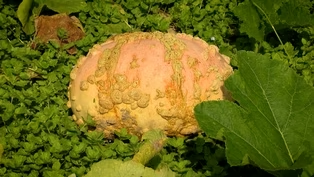
Clip: S26 Ep8 | 7m 28s | Discover the huge variety of pumpkins and other fall gourds available to growers today! (7m 28s)
Providing Support for PBS.org
Learn Moreabout PBS online sponsorship













Support for PBS provided by:
Virginia Home Grown is a local public television program presented by VPM